
Why Burundi
Burundi is full of questions that can be investigated locally.
Rivers and wetlands, watersheds, farmland, rapidly changing urban areas, protected areas and schools all create opportunities for participatory monitoring and locally grounded research.
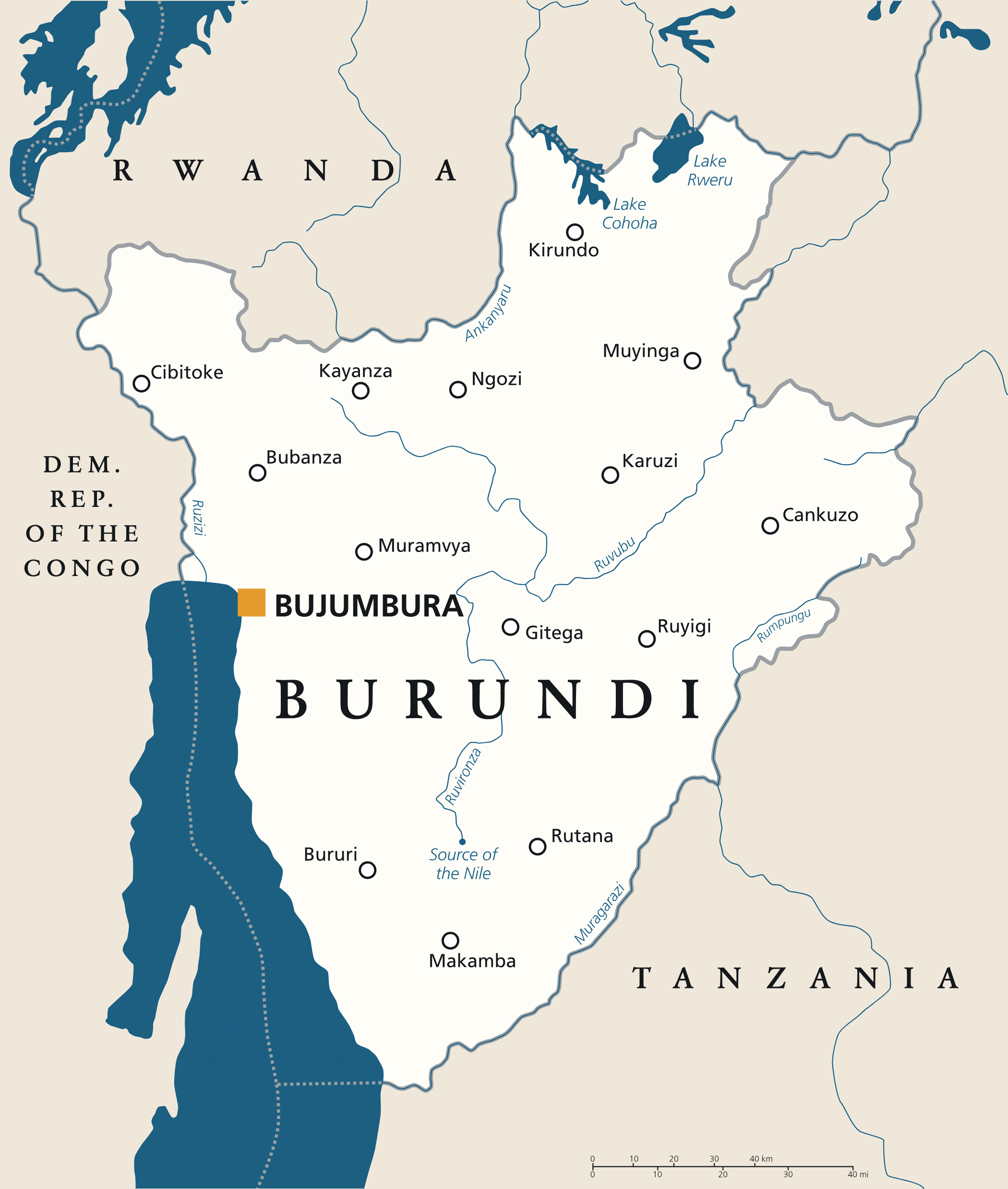
Lake Tanganyika
Shoreline, water condition and the communities whose food, water and work depend on the lake
Rivers + wetlands
The Rusizi system and other waterways where water quality, pollution and habitat change over time
Bujumbura
Drainage, flooding and urban water, where repeated local observation can complement engineering studies
Watersheds + land
Hillsides, erosion, farmland and land-use change across hills
Biodiversity
Protected-area edges, wetlands, seasonal ecological change and species observations
Schools + universities
Classrooms, environmental clubs and research groups already engaged with environmental questions

Why citizen science
Citizen science can extend where and how often observations are made.
Professional monitoring remains essential. Trained community-participants and students can add repeated observations across more places and times when methods are standardised, and quality assurance is built into the project.
EXT · 01
A precedent
Published citizen-science studies on the Tanzanian side of Lake Tanganyika found close agreement between measurements from trained citizen scientists and professional measurements for several water parameters.
EXT · 02
A culture of youth participation
School environmental clubs already operate in Burundi, including programmes run by World Vision with Education Cannot Wait funding and by INADES-Formation. Burundi also held its first Local Conference of Youth on climate in Gitega in October 2025.
Questions we want to explore with partners
Open environmental questions
Water
How do water conditions along the shorelines of African lakes change through the seasons, and what can communities reliably observe?
Urban
Which drainage and flood events recur year after year, and what would repeated local observation add to existing studies?
Land
Where is erosion changing fastest on cultivated hillslopes, and can students document these changes over time?
Biodiversity
What can be learned from repeated observation at wetland and protected-area edges? How can citizen science contribute to advancing integrated scenarios and prediction models for informing transition to a nature positive society?