
Umugambi
BeBirds: Belgian Ringing Scheme
Uriko urakoraWavanywe ahandi
BeBirds – the Belgian Ringing Centre aims to: organize the collection of quality data through a network of certified volunteer ringers; make the data available to scientists, professionals and amateurs, managers and policy makers; promote the development of knowledge through participation in training students; develop own research programs focused on the conservation of Nature.
Ibijanye n’umugambi
Why ring birds?
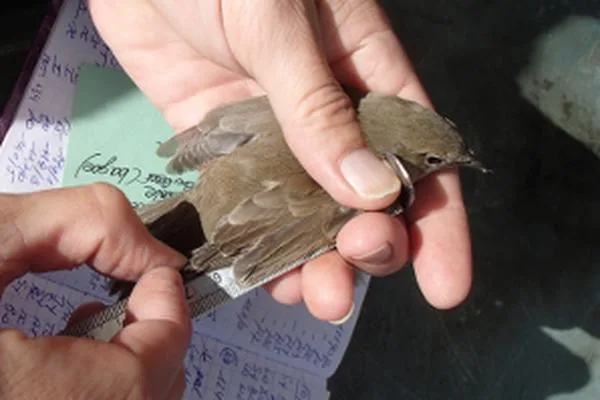
Ringing is a tool for monitoring and observation of wild bird populations. It makes it possible to study migration and demographics. This technique was used for the first time in 1899 by a Danish teacher named Ch. Mortensen. The initial aim was to find out where European breeding birds did spend the winter. This objective is still valid today!
Ringing is not only essential from a scientific point of view but also from a legal point of view since laws and regulations that ensure the conservation of wild birds in Europe, and especially Directive 2009/147/EC of the European Parliament and of the Council of 30 November 2009 on the Conservation of Wild Birds, are based on objective data to define the rules governing their protection, management and regulation.
Furthermore, ringing of birds gives the opportunity, at the same time, to take samples that allow, for example, to study the dispersal of pathogens (influenza, West Nile, Newcastle), the concentrations of pollutants (heavy metals, pesticides) and genetic relationships (reproductive strategies, taxonomy, hybrids).
Ringing Centers are hosted in scientific institutions. They operate in a network for over 100 years and exchange daily information about ringed and recovered (which means found after having been ringed) birds. Since 1963, all the European Ringing Centers operate under the coordination of EURING. EURING provides among others the consistency of data coding, organises a one-stop access to data recovery in Europe and develops pan- European research programs. In Belgium, the Ringing Center goes under the name BEBIRDS.
How to become a ringer?
To ring wild birds requires extensive knowledge in identification and behaviour. The certification process takes at least 4 years. See website BeBirds to learn more about the process!
Ringers always work in teams; there are 51 ringing groups totalizing around 350 ringers. These are distributed throughout Belgium but with a lower coverage in Western Ardennes, in Hainaut and Gaume.
Have you found a ringed bird?
Each finding is important ! If you find a ringed bird, thank you to let BeBirds know. We will edit and send you a recovery sheet compiling all available data about the bird in question.
BeBirds is structurally funded by the Belgian Federal Science Policy and by the ringers themselves.
Citizen-science aspects
The Belgian Ringing Scheme organises a network of certified volunteer ringers. To become ringer of the Belgian Ringing Scheme and receive the legal authorization (ringing permit) to capture and ring wild birds, he or she must follow a training period of minimum 4 years within a ringing group and succesfully present two exams. This system ensures the competence of ringers and therefore the quality of the data collected.
Recoveries (findings and observations) of ringed birds are reported either by ringers – Belgian or foreign – which control a bird already carrying a ring while they mark new ones, either by members of the public. The bird can have entered a house, caught by a cat, or a natural predator, injured following a collision with a vehicle, hunted. The possible causes are numerous and the fact to record them allows, data after data, year after year, to know more about their impact, their proportion, their evolution over time and within areas. Every person reporting a ringed bird is systematically informed of the ins and outs of his or her finding by the sending of a recovery sheet compiling all available data on the bird found.
Ibisobanuro
- Ishirahamwe rirongoye
- Royal Belgian Institute of Natural Sciences (RBINS)
- Hehe
- Kw’isi yose (uwo ari we wese arashobora kwitaba)
Belgium - Ibiyago
- Ibinyabuzima n’ibikoko vyo mw’ishamba
- Ivyo abitanga bakora
- Kuraba no kwandika