
Project
DIVR
ActiveImported
To turn the observations recreational divers already make into validated, openly structured biodiversity data for marine science, expanding ocean observation coverage in coastal and reef environments where research survey effort is sparse but recreational diving is dense.
About the project
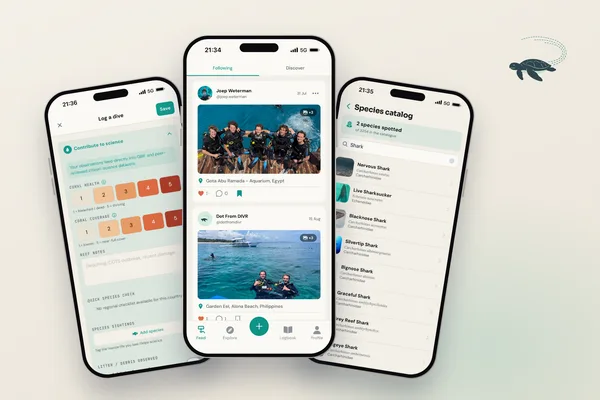
Recreational divers make millions of dives every year and see more of the underwater world than most researchers ever will. Almost none of those observations reach science: they end up in paper logbooks. DIVR closes that gap. It is a free dive-logging app (iOS, Android, web) that works the way divers already log: note the dive, add photos, list the species you saw. Under the hood, every sighting is validated against the WoRMS register, the international authority on marine species names, then structured in Darwin Core, the standard format for biodiversity records, and delivered to marine research organisations. DIVR works with Coral.org and EMODnet. The catalogue holds 4,300+ species and 4,700+ dive sites worldwide, with region-specific species checklists built from real occurrence data. No survey course or programme to join. The app is free for divers.
Citizen-science aspects
Divers are the data collectors. Each logged dive records species sightings, photos, location and depth. Every sighting is validated against the WoRMS species register and structured in Darwin Core before being delivered to marine research organisations, so contributions become genuinely usable scientific records rather than isolated logs. The project engages with the ECSA 10 Principles of Citizen Science: it produces a genuine scientific outcome (biodiversity occurrence data used by research organisations); divers actively generate data rather than only donate resources; participants receive feedback through species identifications and region-specific checklists; data and metadata are made openly available in a standard, reusable format; and contributors are acknowledged for their observations. Participation is free and requires no survey course or programme, which lowers the barrier to taking part.
Details
- Lead organisation
- Joep Weterman
- Where
- Global (anyone can take part)
Netherlands - Topics
- Biodiversity and wildlife, Water
- What volunteers do
- Classifying or identifying, Observing and recording, Taking photos or recordings
- Difficulty
- Easy