
Project
Regenerative Tides: Sailing for Solutions (ReTISS)
ActiveImported
Abandoned fiberglass boats are an overlooked but pressing source of marine pollution. As they degrade, they release microfiberglass particles into surrounding waters. These particles enter the food chain through shellfish and other aquatic life, with consequences for biodiversity and human health.Despite the scale of the problem, there is a critical lack of reliable data. ReTISS seeks to address this by:Creating a public, open-source database of end-of-life boatsDemonstrating the role of citizen science in marine monitoringSupporting policy innovation and environmental justiceAmplifying coastal voices through storytelling and education
About the project
Regenerative Tides: Sailing for Solutions (ReTISS) is a multidisciplinary citizen science initiative combining environmental research, storytelling, and community engagement to investigate the ecological and health impacts of abandoned fiberglass (GRP) boats.
Our mission is to empower coastal communities—particularly underrepresented groups—to take part in field data collection, environmental education, and policy advocacy. By engaging citizens directly, we aim to drive more sustainable marine waste management practices and promote regenerative design in the boating industry.
From June 2025 to January 2026, ReTISS is piloting in Brittany, France, bringing together citizen scientists, students, teachers, artists, sailors, and eco-organizations.
By 2030, we envision ReTISS as a globally recognized model for community-led marine monitoring and advocacy. Building on the Brittany pilot, we aim to:
-
Expand to other European coastal regions through cross-border collaboration
-
Share our open-access toolkit and ArcGIS database with citizen science groups worldwide
-
Contribute data to national and EU marine waste policies and international frameworks such as OSPAR
-
Strengthen partnerships in Small Island Developing States (SIDS), the UK, Japan, Australia, and beyond
-
Operate from the Floating Stories Lab’s wooden catamaran, serving as a mobile field station for science, storytelling, and advocacy
Citizen-science aspects
Participants are:
-
Mapping abandoned, derelict and end-of-life boats through a public survey with results mapped on to an interactive platform
-
Collecting and analyzing water and sediment samples with handheld microscopes
-
Publishing open-access environmental data to support science and policy
-
Co-creating stories and advocacy materials to raise awareness and drive change
With scientific guidance from Dr. Corina Ciocan (University of Brighton, UK), academic support from Dr. Ryua Uda (Tokyo University of Technology) and Dr. Toby Wren (SAE University Australia), along with community engagement support from the Women & the Wind Foundation, our work bridges environmental science and creative activism.
In October 2025, an international creative residency brought together artists, to participate in citizen science and co-produce creatives outputs for public dissemination.
How to take part
Participants are:
-
Mapping abandoned, derelict and end-of-life boats through a public survey with results mapped on to an interactive platform
-
Collecting and analyzing water and sediment samples with handheld microscopes
-
Publishing open-access environmental data to support science and policy
-
Co-creating stories and advocacy materials to raise awareness and drive change
Learn More & Access Resource Materials: https://www.floatingstorieslab.org/regenerative-tides
Equipment needed
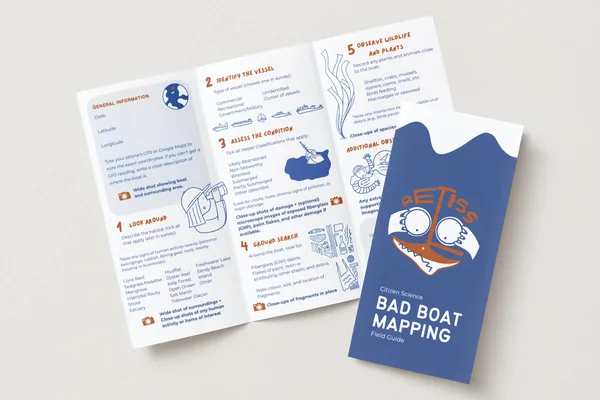
Bad Boat Mapping Field Guide
Hand-held microscope (if available)
Smart Phone with camera
Details
- Lead organisation
- The Floating Stories Lab
- Where
- Global (anyone can take part)
Australia, France, Japan, United Kingdom
Coastal Communities, Estauries and Rivers - Topics
- Ecology and environment, Water
- What volunteers do
- Observing and recording, Other, Taking photos or recordings, Analysing samples
- Difficulty
- Easy
- Dates
- Started June 15, 2025 · Ended January 15, 2026